Common Mistakes in Bookkeeping (Inconsistent Categorization)
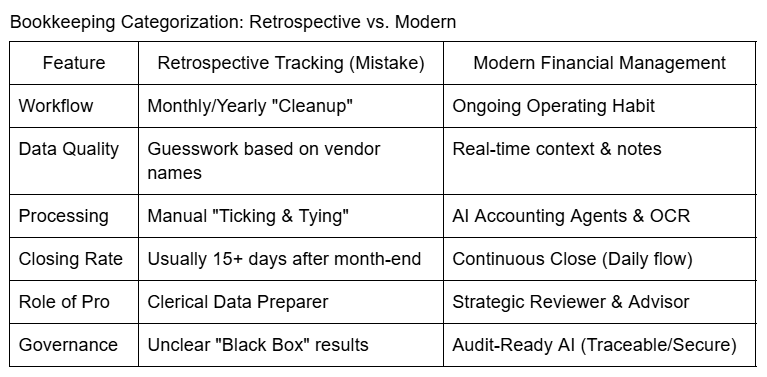
A pervasive mistake in bookkeeping is treating transaction sorting as a retrospective task rather than an ongoing operating habit. When founders allow transactions to pile up until tax season or a moment of cash-flow stress, the critical context behind each expense is often lost. This delay forces bookkeepers to rely on guesswork based solely on vendor names, which is problematic since a single vendor might provide anything from office supplies to marketing services. Consequently, the resulting Profit & Loss Statements and Balance Sheets "don't quite make sense," leading to frequent corrections after the books are closed and a failure to maintain a reliable single source of truth for decision-making.
The digital transformation of modern financial management addresses this through a continuous close model. Instead of a reactive month-end "fire drill," proactive AI Agents, specifically Accounting Agents, now work in the background to handle high-volume transaction matching and categorization in real-time. This evolution facilitates anomaly detection, where intelligent oversight flags unusual shifts or non-patterned transactions based on historical trends. By automating the "ticking and tying," the accounting professional is elevated from a data "preparer" to a strategic reviewer who can focus on judgment, scenario analysis, and financial storytelling to influence business outcomes.
Leveraging outside and online bookkeeping services is highly beneficial for growing firms needing to scale without the overhead of an internal department. These virtual services utilize an integrated tech stack, linking cloud-based platforms like QuickBooks or Xero with advanced practice management tools to eliminate data silos. Furthermore, external firms provide specialized accounting knowledge regarding shifting 2026 regulations and ensure that the system remains "Audit-Ready AI"—meaning every automated entry is traceable, secure, and explainable to satisfy board-level scrutiny. This partnership also offers superior data security, such as SOC II certification, protecting sensitive financial information more robustly than most small in-house teams can manage.