Common Mistakes in Bookkeeping (Delayed Cash Basis)
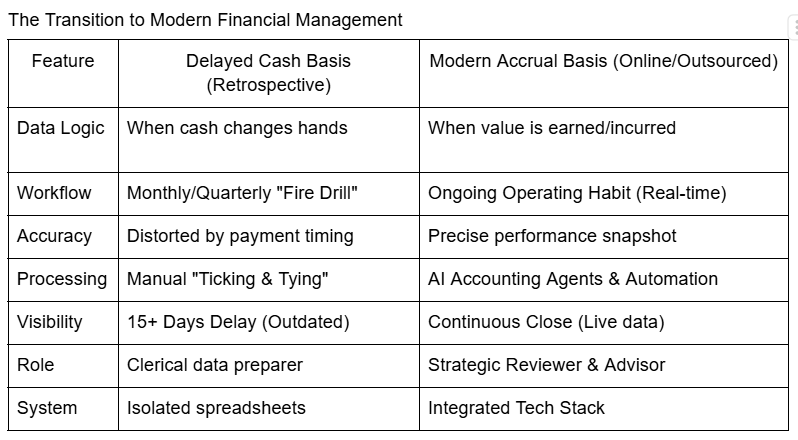
Many early-stage businesses prioritize tax simplicity by staying on a cash basis of accounting far longer than their growth warrants. This method only captures transactions when money physically enters or exits the business, which often distorts the true picture of performance. For companies utilizing subscriptions or annual contracts, a delayed cash basis causes financial results to fluctuate based on payment timing rather than underlying operational health. By the time these retrospective reports are compiled, usually more than 15 days after month-end, the data is already outdated and provides little value for real-time informed decision-making.
Treating bookkeeping as a retrospective chore rather than an ongoing operating habit leads to a significant loss of context regarding expenses. When transactions are allowed to pile up, founders often forget the specific purpose of a charge, forcing bookkeepers to guess categories based solely on vendor names. This creates a broken "upstream" process where "miscellaneous" or "uncategorized" entries clutter the Profit & Loss Statement, preventing the establishment of a single source of truth. Furthermore, manual data entry is slow and susceptible to errors, turning routine financial work into a high-stress year-end "fire drill".
Leveraging outside and online bookkeeping services offers a scalable solution that moves businesses toward a continuous close model. These remote firms utilize an integrated tech stack—a harmonious ecosystem of cloud-based tools that automates transaction matching and categorization. By outsourcing everyday chores to a trusted advisor, leadership teams gain back the time needed to focus on their core mission while benefiting from specialized accounting knowledge regarding 2026 regulations. Modern online systems also provide enhanced data security, such as SOC II Type 1 certification, which protects sensitive information far more robustly than most in-house setups.
The digital transformation of financial management elevates the professional's role from a manual preparer to a strategic reviewer. Utilizing AI agents for rote tasks allows human experts to focus on financial storytelling, translating raw numbers into business narratives that influence growth. This shift ensures that the business is supported by Audit-Ready AI—transparent, secure, and explainable systems that satisfy board-level and regulatory scrutiny. Ultimately, moving away from a delayed, manual approach allows for scenario planning and KPI analysis, transforming financial data into a proactive tool for long-term sustainability.